
Best IT asset management software for midsize companies (2026)
Compare ITAM platforms for organizations of 100–1,000 employees, including features, setup, and pricing.
Last updated
September 14, 2026

Midsize and midmarket companies with around 100–1,000 employees face their own challenge when choosing an IT asset management (ITAM) solution. They have too many devices, software licenses, and other assets for spreadsheets or basic tools to work reliably, but often lack the budget or headcount for a complex enterprise ITAM implementation.
The right ITAM software for midsize organizations should provide broad coverage without adding unnecessary complexity. It should be quick to implement, reduce manual work, centralize all asset data, support compliance, and scale with the company.
This guide compares the best IT asset management platforms for midsize businesses, including:
- Setyl
- Oomnitza
- BlueTally
- Reftab
- Snipe-IT
- Asset Panda
- Torii
- Zluri
What to look for in ITAM software for a midsize organization
The best IT asset management software for midsize IT teams typically provides the following:
- Fast, low-effort setup: Implementation should take days rather than weeks or months. Look for automated data import, native integrations, and configuration that minimize manual setup and reliance on professional services.
- Automation: Your ITAM tool should reduce routine administrative work, helping you work more efficiently and accurately, scale operations without increasing headcount, and free up time for higher-priority projects.
- Hardware and software management in one place: Splitting laptops in one tool, software licenses in another, and peripherals in a spreadsheet creates gaps in visibility. Prioritize a centralized system for all asset and related data.
- Integrations: The platform should connect with the tools you already use, from MDMs and HR systems to identity providers, rather than requiring you to duplicate and manually enter data.
- Ease of use and collaboration: The platform should be easy for new users to adopt, with a low learning curve. Non-technical users outside the IT team should also be able to pick it up quickly, keeping everyone working from one central, up-to-date system.
- Built-in compliance: Passively storing asset data is not enough. Look for an ITAM platform that actively supports audit readiness and compliance with SOC 2, ISO 27001, and other standards.
- Pricing that scales sensibly: Pricing should remain predictable as your company and asset count grow, without large cost increases or unnecessary enterprise features.
Comparison: Best IT asset management software for midsize companies
This data reflects publicly available vendor and third-party information as of September 2026.
IT asset management platform overviews
1. Setyl
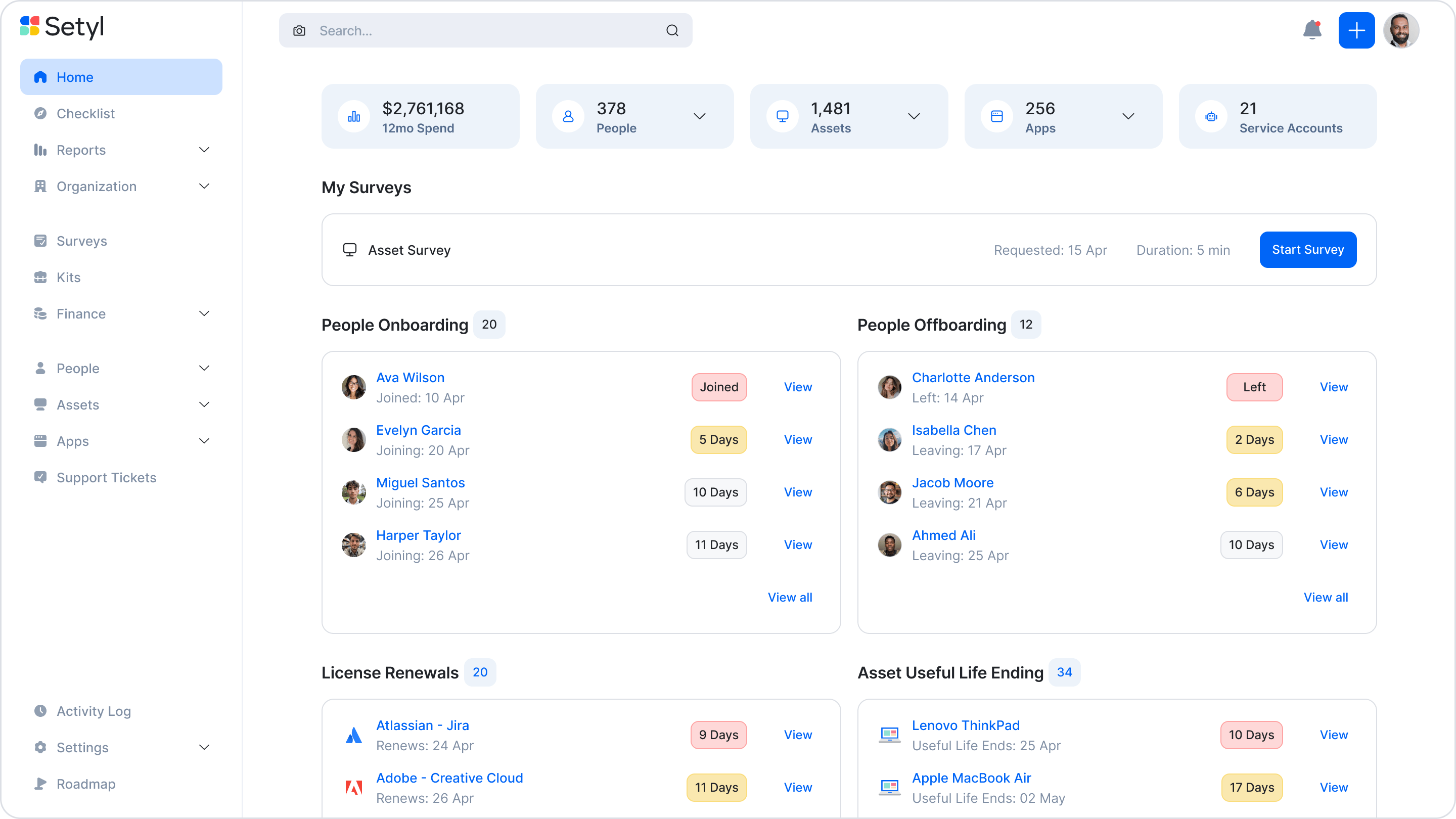
Setyl is an IT asset and license management platform that centralizes hardware, software, licenses, users, vendors, and spend in one system, with over 100 integrations to import data from existing tools. The platform supports IT teams in midsize and large companies with day-to-day operations, IT spend reduction, and audit readiness, via a collaborative interface and automated insights.
Core features include asset lifecycle management, software lifecycle management, renewal tracking, license rightsizing, user onboarding and offboarding, and dedicated compliance functionality. Integrations cover Microsoft, Google, MDM, RMM, HR, IAM, and more systems.
Plans start at $300 per month and pricing is based on the number of employees, with no cap on the number of assets or licenses tracked. Setup takes as little as an hour.
2. Oomnitza
Oomnitza covers hardware, software, and cloud assets in a single, agentless system. It focuses on workflow automation and asset data reconciliation for IT, security, and finance teams, with low-code workflows and a large library of pre-built connectors for aggregating data from existing systems, rather than requiring agents on every endpoint.
Features include hardware lifecycle management, SaaS lifecycle management, software spend control, employee onboarding and offboarding, audit readiness, asset refresh, and policy-driven governance.
Pricing is fully custom, with costs based on selected modules, usage, and level of support. Oomnitza does not publish pricing but entry-level pricing is estimated at $50,000 per year. Getting complete value from the platform's configurability can require significant implementation resources and time.
3. BlueTally
BlueTally is a cloud-based hardware asset inventory system focused on simplicity. It integrates with several MDM platforms including Intune, Jamf, and Iru, and offers an add-on for syncing Microsoft license data.
Features include asset tracking, employee onboarding and offboarding, stock notifications, asset tagging, warranty tracking, software license management, and depreciation reporting.
Pricing starts at $199 per month for up to 250 assets, or free for up to 50 assets. Implementation typically takes a few hours.
.png)
4. Reftab
Reftab is a hardware and software management and maintenance platform for IT teams in small to midsize organizations looking for a step up from spreadsheets.
Core features include lifecycle tracking, maintenance workflows, check-in and check-out, QR codes and barcode scanning, asset history, license tracking, and access reviews, with more than 30 integrations and a mobile app.
Reftab's hardware plans start at $125 per month, with software asset management available at $9 per software user per year. A free tier is available for up to 50 assets. The platform is generally quick to set up.
5. Asset Panda
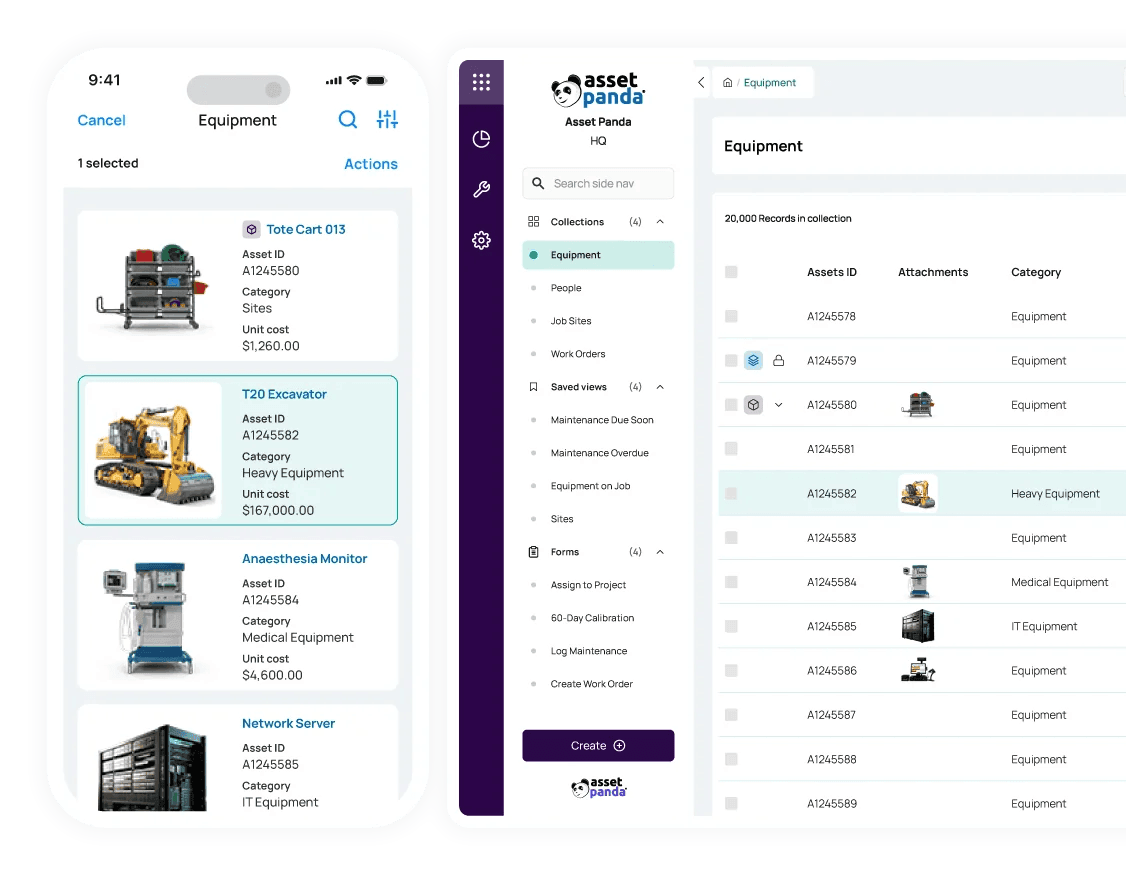
Asset Panda is a customizable, cloud-based asset tracking platform, with purpose-built solutions for education and the public sector. The tool supports a wide range of assets, allowing organizations to manage IT devices and non-IT equipment in one system.
Features include asset tags, barcode scanning, asset reservations, maintenance and inspections, warehouse asset management, fleet management, and audit readiness, plus more than 30 integrations.
Pricing is not officially published, but is estimated to start at $3,000 per year. Implementation requirements are also not disclosed, but are expected to vary widely depending on the level of customization and configuration needed.
6. Snipe-IT
Snipe-IT is an open-source IT asset management system that can be self-hosted at no licensing cost. It's a strong fit for technically comfortable teams that want full control over their data and infrastructure.
The tool offers a core range of functionality across IT asset management, with additional license tracking features. A handful of integrations, such as Slack, Teams, Jamf, and Jira, are available, but the platform primarily relies on its REST API for custom integrations and automations.
Snipe-IT is free when self-hosted, while hosted plans start at $39.99 per month. Setup requirements vary widely based on technical knowledge and customization, while self-hosted deployments also require ongoing infrastructure maintenance.
7. Torii
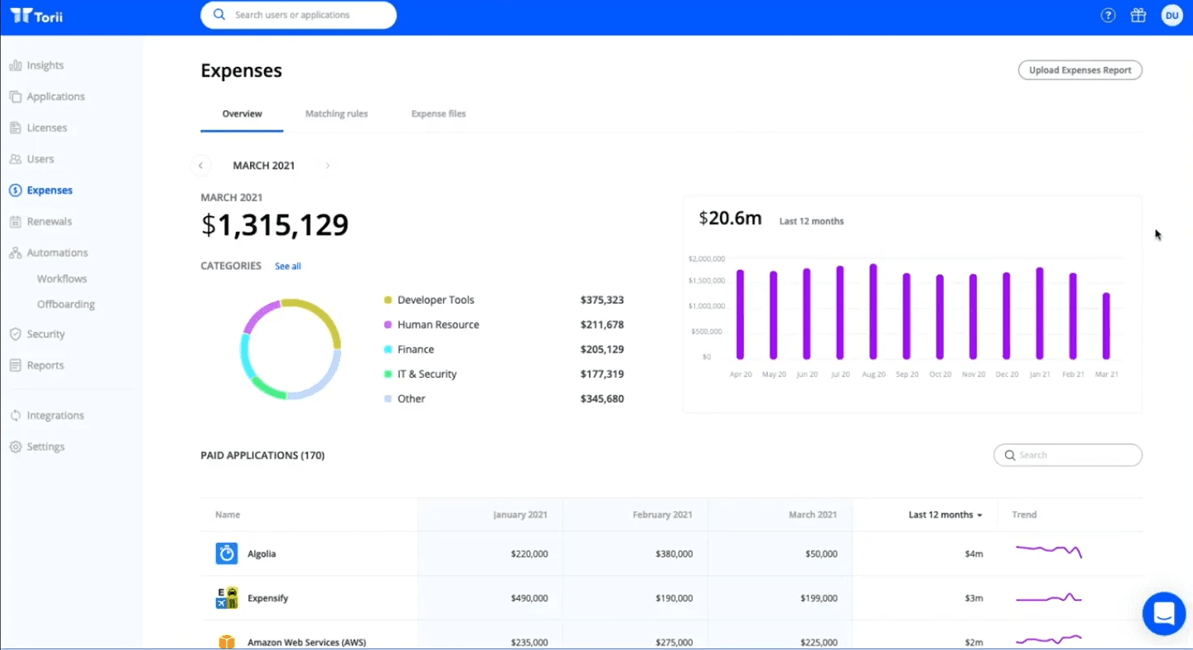
Torii is a SaaS management platform focused on discovering, optimizing, and governing an organization's software, SaaS applications, and subscriptions, supported by a large catalog of native integrations.
The platform automates renewal alerts, license reclamation, and shadow IT detection for SaaS and AI applications. It also provides audit-ready reporting, automated access reviews, and identity lifecycle automation.
Pricing is not disclosed but is estimated to start at $15,000 to $35,000 per year, with setup estimated at 1 to 2 weeks.
8. Zluri
Zluri is a SaaS management and identity governance platform that helps organizations gain visibility into identities and access and automate governance, including through more than 300 integrations.
Features include identity and software application inventory, shadow IT detection, AI application monitoring, lifecycle management, user provisioning and deprovisioning, and access reviews and requests. The platform also supports compliance requirements.
Zluri does not publish pricing publicly, but it is estimated to be in the tens of thousands of dollars per year, depending on the scope of the deployment.
Other tools used by midsize businesses for IT asset management
Several adjacent IT management platforms, including MDM, RMM, and ITSM systems, also offer some IT asset management functionality or add-on modules. Examples include NinjaOne, Lansweeper, Freshservice, and Jira Service Management.
These tools can be a reasonable starting point if you already have them in place, particularly when you’re just starting out with ITAM or have relatively straightforward requirements.
However, when asset management is not the platform’s primary focus, there are limitations. Coverage may be limited to the assets a particular system can discover or manage, making it difficult to maintain a single source of truth across hardware, software, and other assets. These platforms also provide less comprehensive lifecycle management, cross-system data reconciliation, automation, and compliance capabilities than dedicated ITAM software.
As a result, midsize and midmarket companies often deploy these tools alongside, rather than instead of, a dedicated IT asset management platform. Many dedicated ITAM platforms — including several covered in this article — integrate with these MDM, RMM, and ITSM tools, bringing asset data together in one centralized system.
First-hand comparisons between Setyl and other platforms
IT professionals from midsize organizations share their experiences comparing Setyl with other IT asset management platforms, and why they chose Setyl:
“I like the product and it checked a lot of boxes for us. I looked at maybe 10 or more different products and Setyl was the best price VS feature set we found.” — cyr0nk0r on Reddit
“One of the greatest standalone IT Asset Management Systems I've seen to date. After transitioning from Wasp and Asset Panda, Setyl’s UI is far more intuitive and user friendly. The dev team is responsive and takes into consideration what the consumer base needs. This platform does what some platforms won't, and this is what makes them cutting edge over others who have become complacent.” — Richard Castillo, Network Technician at Santa Rosa Rancheria Tachi Yokut Tribe, on LinkedIn
"I don’t normally endorse software and such. But I’ve been exposed to Setyl in my new job and let me tell you, what a f*ing great IT asset management platform." — Sysadmin on Mac Admins Slack
After evaluating other potential solutions such as Asset Panda and EZOfficeInventory and putting Setyl through a rigorous due diligence process, Hakan and the Flagstone team chose Setyl for its broader combination of features and integrations: Read the full case study
Learn more about Setyl
Setyl is an IT asset management platform designed for midsize, midmarket, and larger organizations with roughly 80 to 5,000 employees. Learn more about the platform and its capabilities:

